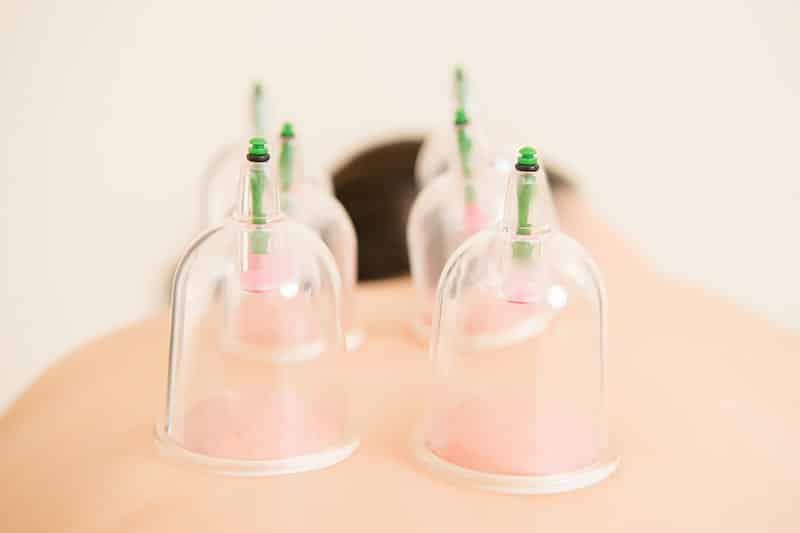
Hello, I’m Louise. Cupping therapy is used to help release muscle tension, support circulation, and assist recovery where muscles remain persistently tight or slow to settle after activity, strain, or ongoing postural load.
Many people look for cupping therapy in Brisbane when they’re dealing with neck tension, shoulder tightness, or upper back discomfort that hasn’t fully responded to stretching or rest. Others come in specifically for sports recovery or after a period of sustained physical strain.
Cupping is available at Balance Acupuncture in Carina as part of a treatment session — and is frequently used alongside acupuncture as part of a broader approach to care.
What Is Cupping Therapy?
Cupping therapy involves placing specialised cups on the skin to create gentle suction over targeted muscle groups.
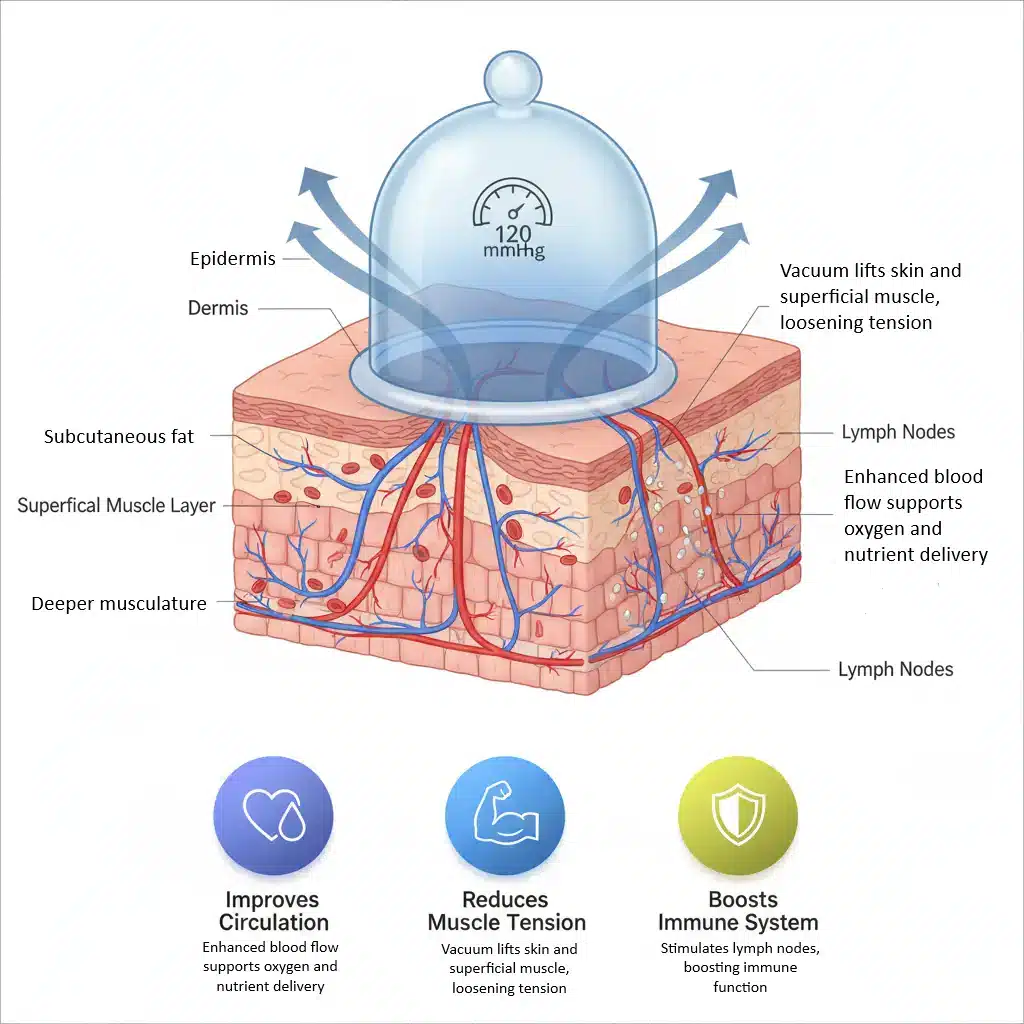
The suction draws blood flow toward the area, encouraging circulation and helping to release tension in the underlying tissue. It is sometimes described as a form of reverse-pressure massage — rather than compressing the tissue, the cup lifts it.
Cupping has been used within Traditional Chinese Medicine for centuries and is now widely integrated into modern musculoskeletal and sports recovery settings. Both dry cupping — where cups are simply placed and held — and sliding cupping, where cups are moved across the skin, are used depending on what the area and presentation require.
What Are the Benefits of Cupping?
The benefits of cupping are most consistently seen in musculoskeletal presentations — where muscles are tight, restricted, or taking longer than expected to recover.
In practice, cupping therapy may help with:
- Releasing deep muscle tension through the neck, shoulders, and upper back
- Supporting recovery from muscle strain or overuse
- Improving circulation to areas of persistent tightness
- Reducing muscle spasm
- Relieving lower back tightness and restriction
- Helping tight muscles settle after sport, physical work, or long periods at a desk
- Supporting overall recovery when combined with acupuncture
Many people describe noticing a reduction in tension and an improvement in how freely an area moves within the session or in the day or two following treatment.
For lower back pain specifically, cupping is often used alongside acupuncture as part of a broader treatment approach — read more about acupuncture for back pain here.
Who Cupping Is Commonly Used For
Cupping is commonly sought by people who feel their muscles won’t properly release, regardless of how much they stretch, rest, or seek other treatment.
In clinic, common presentations include:
- Neck tension that returns persistently despite massage or physiotherapy
- Shoulder tightness, restriction, or ongoing discomfort
- Upper back tension associated with desk work or postural load
- Lower back tightness and stiffness
- IT band tightness or restriction in the legs
- Sports recovery — particularly after heavy training or competition
- General muscle fatigue and a sense of physical heaviness
Cupping is not limited to those who are physically active. Many people who present with neck and shoulder tension are desk workers rather than athletes.
Some people also seek cupping during periods of sustained stress — physical tension through the neck and shoulders is a common way stress accumulates in the body. If that’s what’s driving the tightness, it may be worth reading about acupuncture for stress and anxiety alongside cupping.
What Happens During a Cupping Session
During treatment, cups are placed on the skin over the targeted area and held in position, typically for several minutes.
The sensation is often described as firm pressure or a pulling feeling — different from massage, but not painful for most people. If the suction is too strong or uncomfortable at any point, it can be adjusted immediately.
Sliding cupping — where cups are moved slowly across the skin — may also be used, depending on what the presentation requires. This technique is closer in feel to a deep-pressure massage and is particularly useful for broader areas of tension through the back.
Where appropriate, cupping may be combined with acupuncture in the same session.
The Marks Cupping Leaves — What to Expect
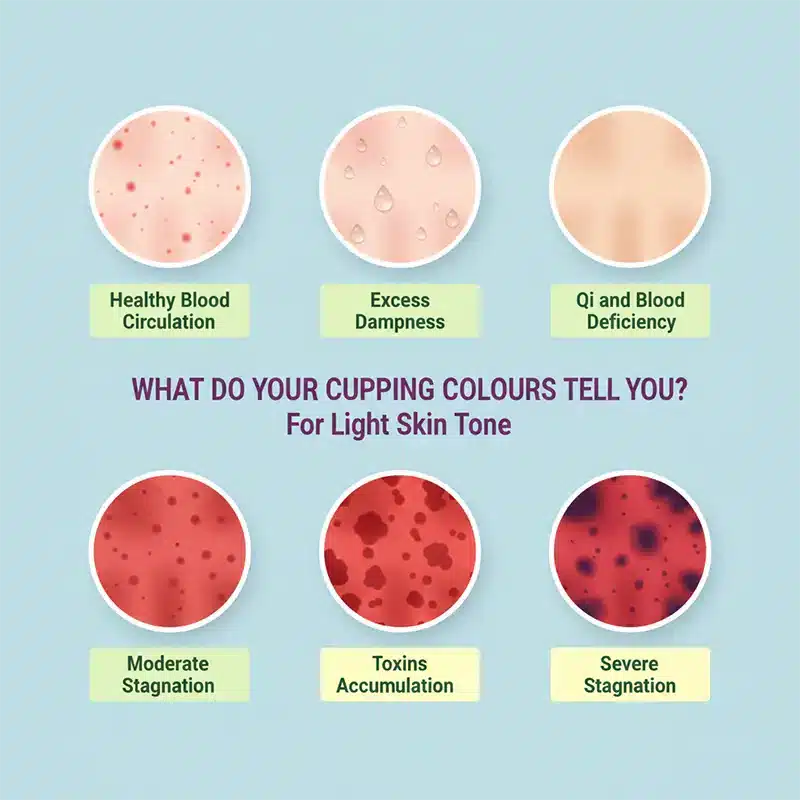
Cupping marks are one of the most commonly asked-about aspects of treatment. They are a normal response to the suction and not a cause for concern.
The discolouration — which ranges from light pink to a deeper reddish-brown — occurs because the suction draws blood and fluid to the surface of the tissue. The intensity of the marking reflects how much tension and restricted circulation is present in that area at the time of treatment.
Cupping marks typically fade within a few days to two weeks, depending on the individual, the area treated, and the intensity of the session. They are usually not painful to touch. Most people find them more noticeable than uncomfortable.
Cupping and Acupuncture
Cupping and acupuncture are frequently used together, and the combination can be particularly effective for musculoskeletal presentations where both tissue tension and underlying pattern need to be addressed. You can read more about the clinic’s acupuncture treatment approach here.
Cupping works at the level of the muscle and superficial tissue. Acupuncture works more specifically on pain pathways, nerve response, and broader systemic patterns. Used together, they complement each other well — particularly for neck and shoulder tension, back pain, and recovery from physical strain.
If you’re unsure whether cupping alone or a combined session is more appropriate for your presentation, that’s discussed during your first appointment.
My Cupping Services in Brisbane: Tailored Just For You
Over the years, I’ve developed a full suite of cupping services designed to fit your unique body and wellness goals, including:
- Dry cupping benefits for easing muscle knots and tightness.
- Gentle suction cup back therapy focused on deep relaxation and chronic pain relief.
- Integrative techniques combining moxibustion and cupping for enhanced healing.
- Specialised care, such as cupping therapy for lower back pain or cupping therapy for neck pain.
My practice carefully respects cupping therapy contraindications, so you always receive safe, effective care.
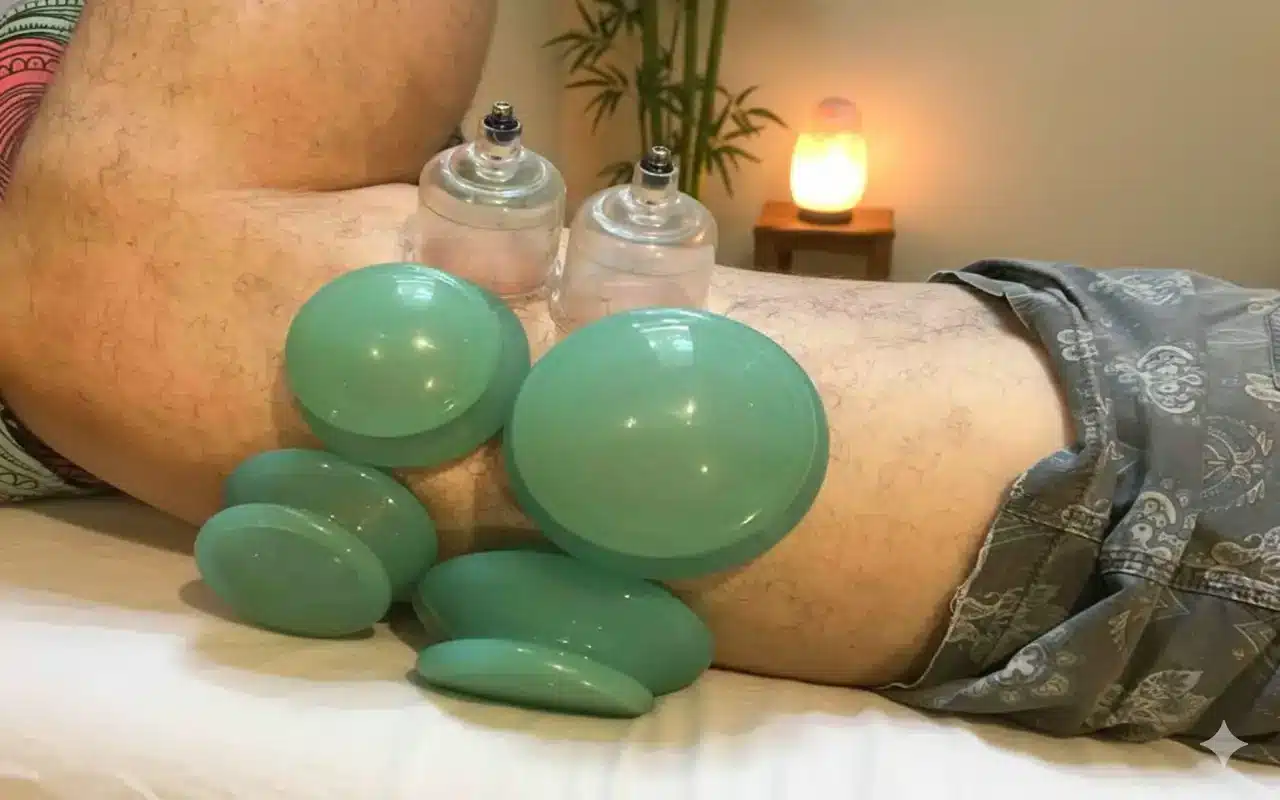
Different types of cupping cups suit your needs. For example, cupping for thighs of a cyclist or a different kind of athlete. Silicone flexible ones are perfect for cupping for leg circulation.
Common Questions About Cupping Therapy
Does cupping hurt?
Most people describe cupping as a firm pulling or pressure sensation — different from massage, but generally well tolerated. Suction level is adjusted to your comfort throughout the session.

LifeWave Patches – Click the logo to learn more
Movement - Unlock full movement potential
Does cupping help tight muscles?
Yes. Cupping is specifically used for persistent muscle tightness — particularly through the neck, upper back, shoulders, and lower back. Many people notice an improvement in how freely the area moves following treatment.
Does cupping get rid of muscle knots?
Cupping can help release areas of concentrated muscle tension. It works by increasing circulation to the area and lifting the tissue, which may help reduce the tightness associated with muscle knots over time.
Why does cupping leave marks?
Cupping marks occur because the suction brings blood flow to the surface of the tissue. They are a normal response — not bruising in the conventional sense — and reflect the level of tension present in that area.
How long do cupping bruises last?
Cupping marks typically fade within a few days to two weeks. The timeline varies depending on the individual, the area treated, and how much tension was present. They are generally not tender to touch.
Does cupping help back pain?
Cupping is commonly used for lower back tightness and restriction. It may help reduce muscle tension, improve circulation to the area, and support recovery when used consistently.
Can cupping be combined with acupuncture?
Yes, and it often is. Cupping and acupuncture are frequently used together in the same session where both tissue-level tension and broader patterns are present.
How much does cupping cost?
Cupping is available at Balance Acupuncture as part of a treatment session. Pricing is discussed at the time of booking — contact us here for current session fees.
References
- Cao, H., Li, X., & Liu, J. (2012). An updated review of the efficacy of cupping therapy. PLoS ONE, 7(2), e31793.
- Kim, J. I., Lee, M. S., Lee, D. H., Boddy, K., & Ernst, E. (2011). Cupping for treating pain: a systematic review. Evidence-Based Complementary and Alternative Medicine, 2011, 467014.
- National Center for Complementary and Integrative Health. Acupuncture: In Depth. Retrieved May 2026. https://www.nccih.nih.gov/health/acupuncture-in-depth